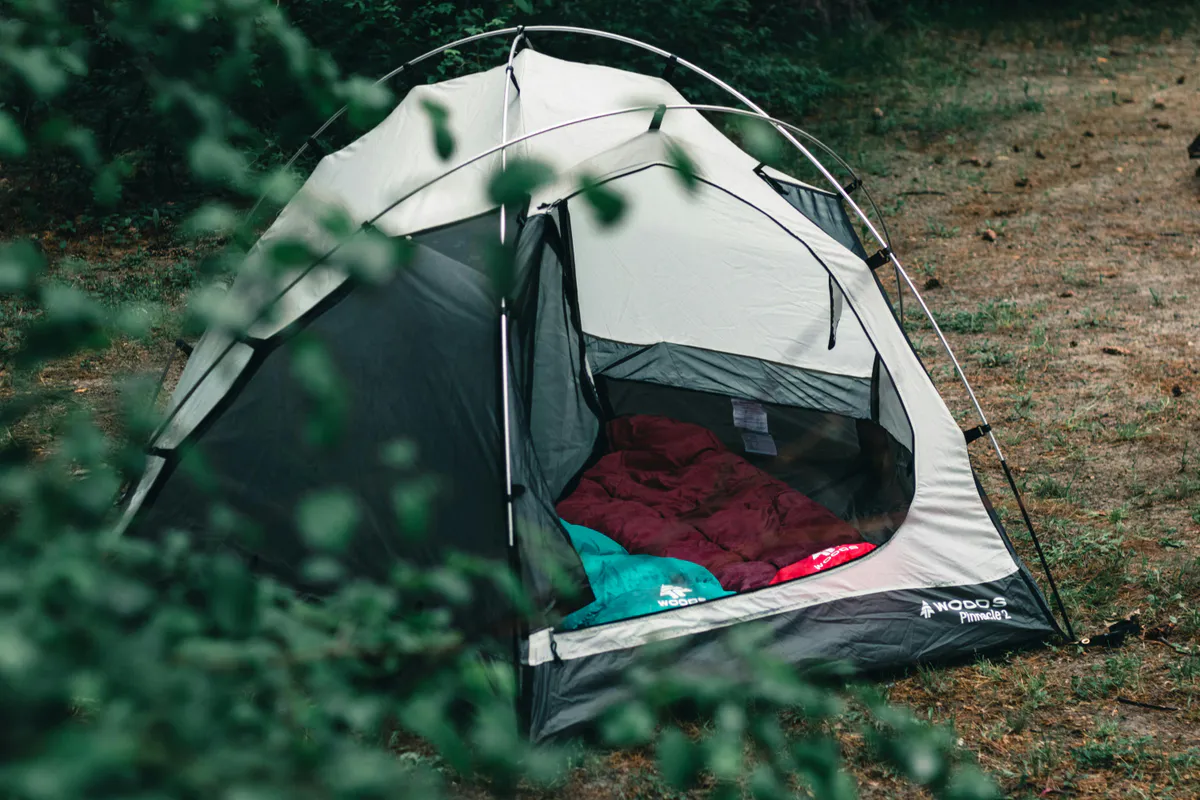
Camping in Maine means dealing with conditions that most gear marketing does not prepare you for. Coastal fog that soaks everything. Nights that drop into the 40s even in July. Rain that lasts three days straight. Rocky, rooty ground that punishes thin sleeping pads. And bugs that test your patience and your tent’s mesh integrity.
The gear that works well in Maine is not always the lightest or most expensive. It is the gear that handles moisture, cold nights, and variable weather without failing. Here are our tested picks for the essentials, followed by a complete packing checklist.
Shelter
REI Co-op Half Dome SL 2+ - Best All-Around Tent
The Half Dome SL 2+ hits the sweet spot for Maine camping. It is freestanding (critical on rocky Acadia campsites where stakes barely penetrate), has two vestibules for storing wet gear outside the sleeping area, and ventilates well enough to manage the condensation that plagues coastal campers.
The “2+” sizing means two adults fit comfortably with room for gear. If you are car camping, the extra weight (4 lbs 7 oz) is a non-issue. For backpacking, consider the lighter Half Dome SL 2, which drops about 10 ounces.
Maine-specific tip: Always set up the rain fly, even if the forecast is clear. Coastal fog rolls in without warning and will soak a mesh-only tent overnight.
Alternatives: The Big Agnes Copper Spur HV UL2 ($450) is the premium ultralight option at 2 lbs 11 oz. The Kelty Late Start 2 ($130) is a solid budget choice for car camping.
Sleep System
Kelty Cosmic 20 Sleeping Bag - Best Value
Maine nights are colder than most people expect. Even in July, temperatures in the 40s are common at campgrounds like Baxter State Park and the western mountains. By September, overnight lows can dip into the 30s.
The Kelty Cosmic 20 provides a 20-degree comfort rating at a price that makes it accessible for occasional campers. The synthetic fill is a deliberate choice for Maine, as it continues to insulate when damp (down does not). The draft tube along the zipper seals out cold air, and the hood cinches tight for cold nights.
Alternatives: For a lighter, packable option, the REI Magma 30 ($260, down fill) is excellent in summer. For winter camping, step up to a 0-degree bag.
Therm-a-Rest NeoAir XLite NXT - Best Sleeping Pad
A sleeping pad’s R-value determines how well it insulates you from the cold ground, and in Maine, this matters more than cushion thickness. The NeoAir XLite NXT has an R-value of 4.5, which is comfortable on the cold, often damp ground at Maine campgrounds through three seasons.
At 12.5 ounces and packing smaller than a water bottle, it is one of the lightest pads with this insulation level. The Triangular Core Matrix baffles are stable (you will not roll off) and relatively quiet compared to older models.
Budget alternative: The Therm-a-Rest Trail Scout ($50, R-value 3.4) is a closed-cell foam pad that never punctures and provides decent insulation for summer camping.
Cooking
Jetboil Flash - Best for Quick Meals
The Jetboil Flash boils water faster than any other compact stove system we have used. Two cups in about 100 seconds. For coffee in the morning, dehydrated meals at camp, and hot chocolate on cold evenings, it is hard to beat.
The integrated design means the stove, pot, and stabilizer nest inside the pot for packing. The push-button igniter works reliably even in Maine’s damp conditions, though carrying a backup lighter is always smart.
The limitation is that the Flash is a water boiler, not a cooking system. If you want to simmer sauces or fry eggs, look at the MSR PocketRocket Deluxe ($55) with a separate pot instead.
Fuel note: Bring extra fuel canisters. Cold temperatures reduce canister pressure, and a one-week Maine trip can burn through two canisters with morning and evening use.
Water
Sawyer Squeeze - Best Water Filter
Maine has abundant water sources, from mountain streams to lake edges, but giardia and other waterborne pathogens are present. The Sawyer Squeeze filters to 0.1 microns, removing bacteria and protozoa, and weighs just 3 ounces.
You fill the included squeeze bags from a stream, screw on the filter, and squeeze clean water into your bottle. No pumping, no batteries, no chemical taste. The flow rate is fast when the filter is clean and slows as it gets clogged, which is your signal to backflush it.
Tip: Bring extra squeeze bags (the originals can fail at the seams after heavy use) or a hydration bladder with the right thread to use as a reservoir.
Alternative: The Katadyn BeFree ($45) has a faster flow rate and simpler design but a shorter filter life.
Light
Black Diamond Spot 400 - Best Headlamp
A reliable headlamp is essential for early morning camp tasks, evening bathroom trips, and any hike that runs longer than planned. The Spot 400 covers the range with 400 lumens on high (enough to light up a wide trail), 4 lumens on dim (enough to find your tent zipper without blinding your neighbors), and a red light mode for preserving night vision.
The IPX8 waterproof rating means heavy rain will not kill it. In Maine, where showers roll through campgrounds regularly, this matters.
Battery tip: Carry spare AAA batteries. Cold temperatures drain batteries faster, and the Spot 400 on high mode goes through them quickly.
Complete Maine Camping Checklist
Shelter and Sleep
- Tent with rain fly and footprint
- Sleeping bag (20-degree rating for 3-season)
- Sleeping pad (R-value 3.5+)
- Pillow (inflatable or stuff sack with clothes)
Cooking and Water
- Stove and fuel
- Lighter and backup lighter
- Pot or Jetboil system
- Water filter
- Water bottles (2+ liters capacity)
- Utensils, bowl, and mug
- Biodegradable soap and small sponge
- Bear canister or hang bag with rope (required at Baxter State Park)
Clothing
- Moisture-wicking base layers
- Insulating mid-layer (fleece or puffy)
- Rain jacket and pants
- Hiking pants and shorts
- Warm hat and sun hat
- Hiking socks (2+ pairs)
- Camp shoes or sandals
Safety and Navigation
- Headlamp with spare batteries
- First aid kit
- Map and compass or downloaded offline map
- Whistle
- Fire starter (waterproof matches or ferro rod)
- Knife or multi-tool
Bug Protection
- Permethrin spray for clothing
- DEET or picaridin skin repellent
- Tick removal tool
- Head net (May-June)
Camp Comfort
- Camp chair (car camping)
- Tarp for rain shelter over cooking area
- Paracord (50 ft, many uses)
- Trash bags (pack out everything)
- Toilet paper and trowel (for backcountry sites)
- Sunscreen and lip balm
Car Camping Extras
- Cooler with ice
- Firewood (buy local, do not transport)
- Lantern
- Table cloth or ground sheet
- Extra tarps
Maine-Specific Camping Tips
Book campsites early. Acadia campgrounds (Blackwoods, Seawall) fill months in advance for summer. Baxter State Park reservations open in January and sell out quickly. State park campgrounds are easier to book but still fill on summer weekends.
Buy firewood locally. Transporting firewood spreads invasive insects like the emerald ash borer. Every campground and many general stores sell local bundles. Expect to pay $6-10 per bundle.
Prepare for rain. It rains in Maine. Often. A tarp strung over your cooking area makes rainy camp life dramatically more comfortable. Bring at least two extra trash bags for keeping gear dry.
Respect quiet hours. Maine campgrounds generally observe quiet hours from 10 PM to 7 AM. The culture leans toward peaceful and outdoorsy, not party camping.
Store food properly. Black bears are present throughout Maine, especially in the western mountains and northern woods. Use bear canisters where required (Baxter State Park), hang food bags where allowed, and never store food in your tent.