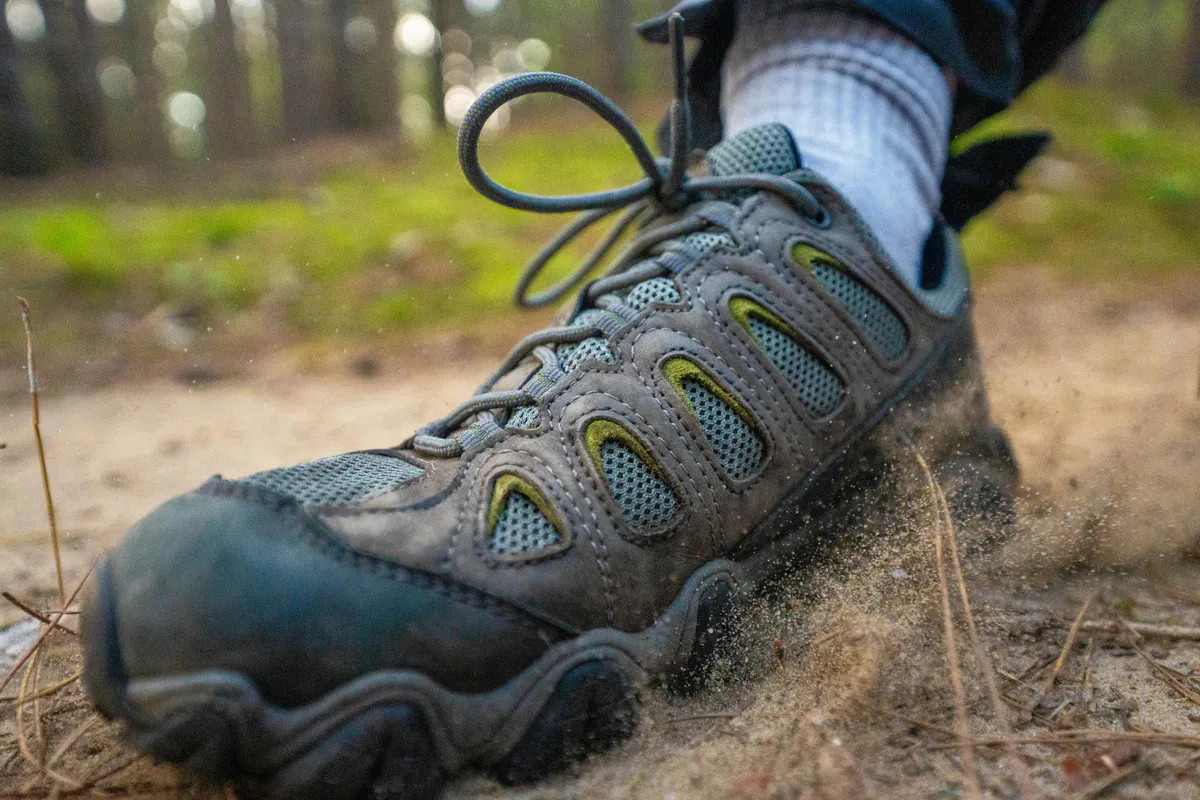
Maine trails will destroy the wrong boots. Wet granite that turns to a skating rink after rain. Root networks that grab your toes and twist your ankles. Mud that tries to suck your shoes off. Stream crossings on every other trail. If your boots cannot handle all of that, you will feel it.
We tested these six boots across dozens of Maine trails, from Acadia’s coastal granite to Katahdin’s above-treeline boulder fields, through mud season in the western mountains and all-day rain on Midcoast paths. Here is what held up and what did not.
What Maine Trails Demand from a Boot
Before getting into specific boots, it helps to understand why Maine terrain is uniquely challenging for footwear:
Wet granite is the defining feature of Maine hiking. Acadia, the Camden Hills, Tumbledown, and hundreds of other trails cross exposed granite slabs that become dangerously slippery when wet. You need a rubber compound that grips wet rock, not just a deep tread pattern.
Roots and mud cover most forest trails from spring through fall. Maine’s dense forests produce a thick root mat that is slippery when damp and uneven at all times. Mud season (mid-April through May) turns many trails into ankle-deep soup.
Water everywhere. Stream crossings, boggy sections, and morning dew mean your boots will get wet. Waterproofing is not optional in Maine.
Rocky terrain on mountain summits and ridge trails requires a sole stiff enough to protect your feet from sharp edges but flexible enough to walk comfortably for hours.
The Boots We Recommend
1. Salomon X Ultra 4 Mid GTX - Best Overall
The X Ultra 4 is the boot we reach for most often in Maine. Salomon’s Contagrip MA rubber compound sticks to wet granite better than almost anything else we tested, and the Advanced Chassis midsole provides a stable platform on uneven terrain without feeling stiff.
The Gore-Tex liner has been reliable through stream crossings and full days of rain. The boot is surprisingly lightweight for a mid-cut, which makes a real difference on longer hikes like the Cadillac South Ridge or Katahdin’s Hunt Trail.
The one downside is the fit. Salomon runs narrow, and if you have wide feet, you may find the toe box cramped after a few miles. Try them on with your hiking socks before committing.
2. Merrell Moab 3 Mid Waterproof - Best Value
The Moab has been one of the best-selling hiking boots in America for years, and the third generation is the best yet. It fits comfortably right out of the box with almost no break-in period, the Vibram TC5+ sole handles roots and mud confidently, and the price is hard to argue with.
On wet granite specifically, the Moab 3 is a step behind the Salomon and La Sportiva. It grips well enough for most Acadia trails, but on steeply angled wet slabs, you will notice the difference. For general Maine hiking on forest trails, carriage roads, and moderate summits, it is an excellent choice.
3. Keen Targhee III Waterproof Mid - Best for Wide Feet
If standard hiking boots squeeze your toes, the Targhee III is the answer. Keen’s signature wide toe box gives your feet room to spread naturally, and the KEEN.DRY waterproof membrane handles rain and puddles without complaint.
The traction on muddy trails is particularly strong. The 4mm multi-directional lugs clear mud effectively and grip well on roots. It is heavier than the Salomon or Danner, which you will notice on longer hikes, but the comfort trade-off is worth it for wider-footed hikers.
4. Danner Trail 2650 Mid GTX - Best Lightweight Option
The Trail 2650 blurs the line between a hiking boot and a trail runner. It weighs barely more than a running shoe but provides mid-cut ankle coverage and a Gore-Tex liner. The Vibram 460 outsole with Megagrip rubber performs well on wet rock, and the EE midsole cushions rocky terrain.
The trade-off is reduced stiffness and ankle support. On technical scrambles or heavy pack days, you may want something more substantial. But for fast-and-light day hikes on Acadia’s trails or a quick ascent of Pleasant Mountain, the Trail 2650 is hard to beat.
5. HOKA Anacapa Mid GTX - Best Cushioning
HOKA brought their signature maximalist cushioning to a legitimate hiking boot, and the result is a boot that makes long granite descents noticeably easier on your knees and joints. The Vibram Megagrip outsole provides reliable wet traction, and the Gore-Tex liner is waterproof.
The thick midsole does reduce ground feel, which is a disadvantage on technical terrain where you want to feel every foothold. On well-maintained trails and carriage roads, though, the comfort is unmatched. If you are doing high-mileage days or your knees protest on descents, the Anacapa deserves serious consideration.
6. La Sportiva Ultra Raptor II Mid GTX - Best for Technical Terrain
The Ultra Raptor II has the best wet rock grip of any boot we tested, thanks to La Sportiva’s FriXion XF 2.0 rubber compound. On Acadia’s steepest wet granite and the exposed scrambles of Katahdin’s Knife Edge, this boot inspires confidence that others simply do not.
It is also the most expensive boot on the list and runs small (order a half size up). But if you are doing serious mountain hiking in Maine and wet rock performance is your top priority, the La Sportiva is the one to get.
How to Choose
For most Maine hikers: The Salomon X Ultra 4 Mid GTX is the best all-around choice. It handles everything Maine throws at it and does not weigh you down.
On a budget: The Merrell Moab 3 gives you 90% of the performance at 80% of the price. It is the easiest boot on this list to live with day to day.
Wide feet: Keen Targhee III, no contest.
Speed and light weight: Danner Trail 2650 if you prefer to move fast and pack light.
Long days on hard terrain: HOKA Anacapa for cushioning, La Sportiva Ultra Raptor II for grip and technical performance.
Boot Care Tips for Maine Conditions
Dry them properly. Remove insoles and open the tongue after every hike. Stuff with newspaper overnight. Never put hiking boots near a heat source or in a dryer.
Clean the outsole. Maine mud and pine sap degrade rubber over time. Rinse the soles after muddy hikes and scrub with a stiff brush.
Reapply DWR treatment. The water-repellent coating on the upper wears off with use. Reapply a DWR spray (like Nikwax TX.Direct) every few months during hiking season.
Replace when the tread wears. Most hiking boots last 500-1,000 miles depending on terrain. If the tread lugs are worn flat, you have lost your grip advantage, and it is time for a new pair.